
Demystifying ML: A Software Engineer's No-BS Guide
ML feels like magic, right? This guide breaks it down for software engineers. Ready to finally *get* machine learning? Read on!
Let's be real: Machine learning (ML) feels like that guy at the party who only talks about crypto and NFTs – impressive sounding, but nobody really understands what they're saying. You're a software engineer; you build things. ML seems… different. Fear not, code warrior!
This "There is No Spoon" guide (yes, like The Matrix) is your decoder ring to the world of ML. Think of it as less "black box wizardry" and more "really clever algorithms."
ML for Engineers: Ditch the Hype, Embrace the Code
The original "There is No Spoon" primer, floating around Hacker News [1], aims to do just that: demystify ML for us practical-minded software engineers. It’s about understanding the fundamentals without drowning in math or getting lost in academic papers. It's about building real things.
So, what's the core idea? Instead of viewing ML as some abstract, future-of-everything concept, think of it as a set of tools and techniques that can solve specific problems. Think:
* Classification: Is this email spam? Is this loan application likely to be approved?
* Regression: What will the price of cocoa be next month? How many users will sign up for our app this week?
* Clustering: Grouping customers based on their behavior. Identifying patterns in sensor data.
See? Suddenly, it's less "Skynet" and more "useful."
Stop Reinventing the Wheel (and Start Using Libraries)
You wouldn't build a web server from scratch, would you? Same goes for ML. Libraries like TensorFlow, PyTorch, and scikit-learn are your friends. They provide pre-built models and algorithms that you can use (and customize) without needing a PhD in statistics.
The key is understanding what these libraries do and how to apply them to your specific problem. It's about knowing when to use a random forest vs. a support vector machine, not deriving the underlying equations.
Data: The Secret Sauce (and the Biggest Headache)
Okay, here's the truth: ML is only as good as the data you feed it. Garbage in, garbage out. Spend time cleaning, preparing, and understanding your data. This is often the most time-consuming (and least glamorous) part of the process, but it's crucial.
Think of it like this: your ML model is a kenkey seller. They make delicious kenkey, but if you give them rotten corn, well… you get the idea.
What Nobody's Talking About: The "So What?" Factor
Everyone’s busy hyping up the latest AI breakthroughs, but nobody's really asking, "So what?" How does this actually translate into value for businesses and users?
Explainability: Can you explain why* your model made a particular prediction? If not, you're going to have a hard time trusting it (or convincing your boss to trust it).
* Bias: Is your data biased in some way? If so, your model will be too. This is a HUGE problem, especially when dealing with sensitive data like loan applications or job applications.
* Deployment: Getting a model to work on your laptop is one thing. Getting it to work in production, at scale, is a whole different ball game. Think about infrastructure, monitoring, and maintenance.
These are the real challenges that software engineers face when working with ML. It's not just about building a cool model; it's about building a useful and reliable one.
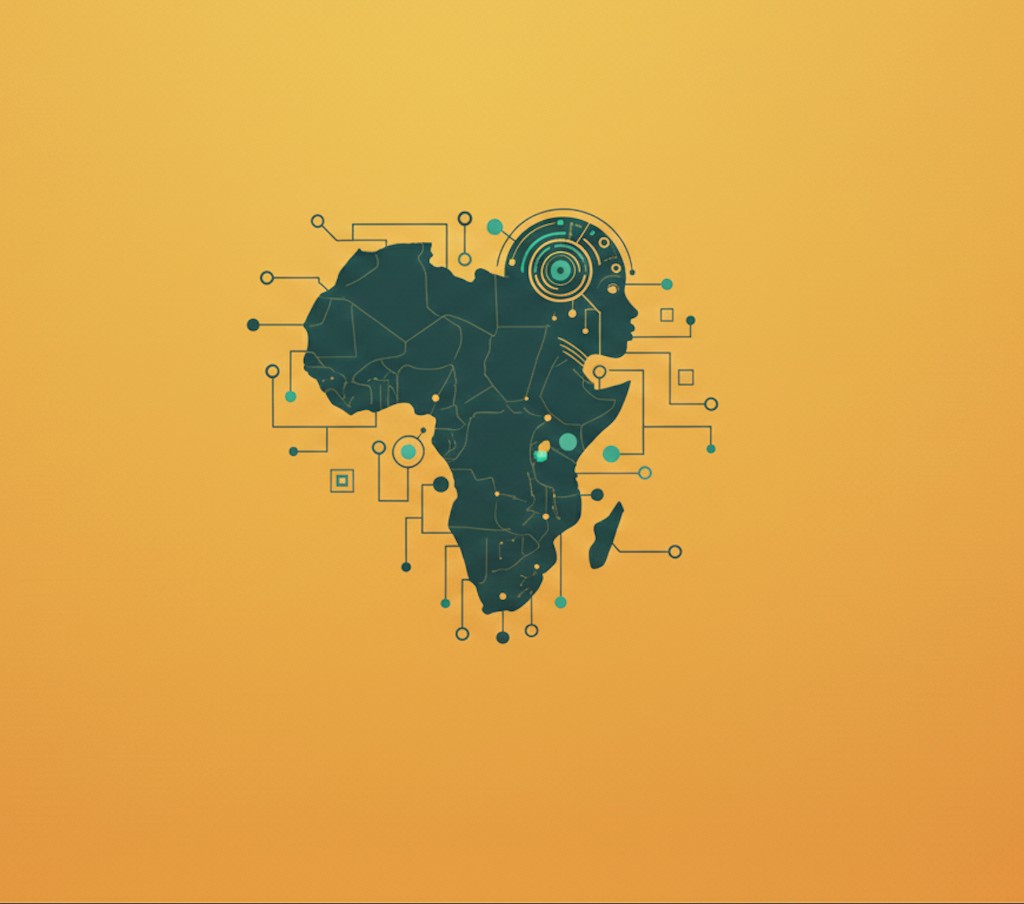
The African Angle: ML in Accra and Beyond
Okay, let's bring this home. What does all this ML talk mean for us here in Ghana (and across Africa)? Turns out, quite a lot.
* Mobile-First Opportunity: Africa is a mobile-first continent. ML can be used to personalize mobile experiences, optimize data usage, and improve accessibility. Think personalized education apps, AI-powered healthcare chatbots, or fraud detection for mobile money transactions.
* Data Scarcity (and Creativity): Let's be real, we don't always have access to the same massive datasets as companies in Silicon Valley. This forces us to be more creative with data collection and augmentation. Ever heard of anyone manually labelling datasets for an Accra specific use case?
* Local Talent: There's a growing pool of talented software engineers and data scientists across Africa. Organizations like AI Ghana are helping to build the local ML ecosystem through training, research, and community building.
* Real-World Examples: Consider companies like mPharma, which uses data analytics to improve drug supply chains in Africa, or Farmerline, which provides agricultural information and services to farmers via mobile. These are just a few examples of how ML is already making a difference on the continent.
But, there are challenges. Access to computing resources, reliable internet connectivity, and funding are all hurdles that African ML startups need to overcome.
The biggest opportunity? Applying ML to solve local problems. Forget building the next facial recognition app (unless it can accurately identify different types of jollof). Focus on using ML to address challenges in agriculture, healthcare, education, and finance.
FAQ: Your Burning ML Questions Answered
* What's the best way to get started with ML as a software engineer?
Start with the basics. Learn Python, get familiar with libraries like scikit-learn, and work through some online tutorials. Focus on understanding the fundamentals and building small projects. Don't try to learn everything at once.
* Do I need a math degree to work in ML?
No, but a solid understanding of basic statistics and linear algebra is helpful. You don't need to be a mathematician, but you should be comfortable with concepts like probability, distributions, and matrices.
* What are some common mistakes that software engineers make when working with ML?
Ignoring data quality, over-fitting models, and neglecting deployment considerations are all common pitfalls. Remember to focus on building reliable and explainable models.
* How does the limited access to high-quality data in Africa affect ML development?
African ML projects often require creative data collection and augmentation strategies. Techniques like transfer learning and synthetic data generation can help to overcome data scarcity.
* Are there any specific ML skills that are particularly valuable in the African tech ecosystem?
Skills in natural language processing (NLP) for local languages, computer vision for agriculture, and fraud detection for mobile money are all highly sought after.
Sources
1. "There is No Spoon. A software engineers primer for demystified ML" - https://github.com/dreddnafious/thereisnospoon
So, are you ready to ditch the hype and start building something real with machine learning? What local problem are you going to solve with ML?
You Might Also Like
- AI Data Center Bust? The $9T Bubble That Could Explode
- Attie.ai: The AI Skill Coach You Won't Believe Exists
- Hugging Face: Master AI Model Deployment Like a Pro
---
Want to go deeper on topics like this? ShowMe is where African tech professionals learn, teach, and build together. Join a Compound or start teaching what you know.
This article was AI-assisted and editor-reviewed. See our editorial policy for how we use AI.
The ShowMe Blog
AI-CuratedAI-curated insights on technology, business innovation, and digital transformation across Africa. Every post is synthesized from multiple verified sources with original analysis.
Related Posts

AI Data Center Bust? The $9T Bubble About to Pop?
Hold up, another "revolutionary" tech trend that's actually just a house of cards waiting to collapse? Color me shocked. Apparently, the AI data center boom – projected to reach a staggering $9 trilli
Read more
Attie.ai: The AI-Powered Learning Tool You Need?
Okay, let's be real: the internet is drowning in "revolutionary" AI tools that promise to magically solve all your problems. And now there's Attie.ai, claiming to personalize your learning experience.
Read more
AI Data Center Bust? The $9T Bubble About to Burst
Hold up. NINE TRILLION dollars? That's the projected investment in AI data centers over the next few years. Seems legit, right? Or is it just another tech bubble inflated by hype and cheap venture cap
Read more